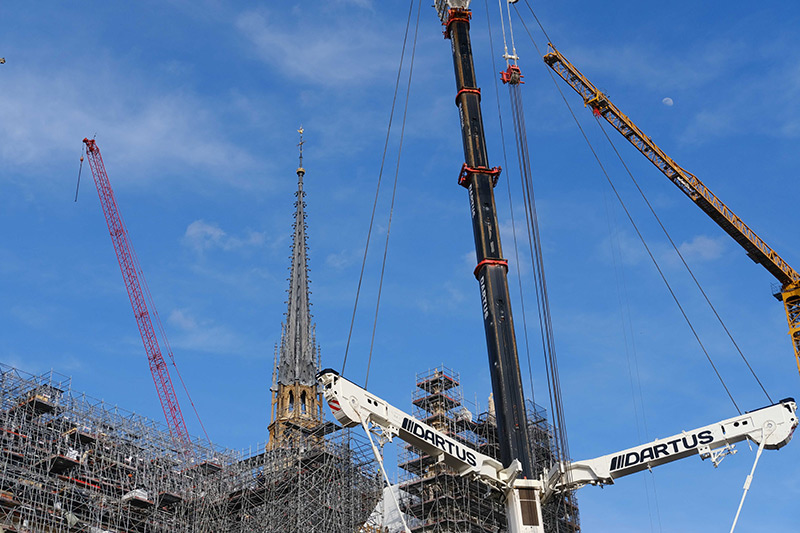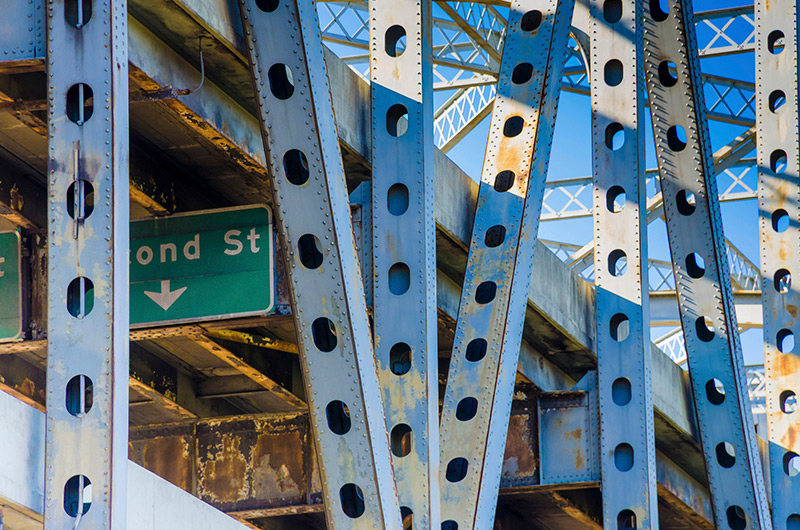
It may seem extreme to claim industrial wire rope is at the heart of the Brent Spence Bridge project. However, this is an immense, once-in-a-lifetime project.
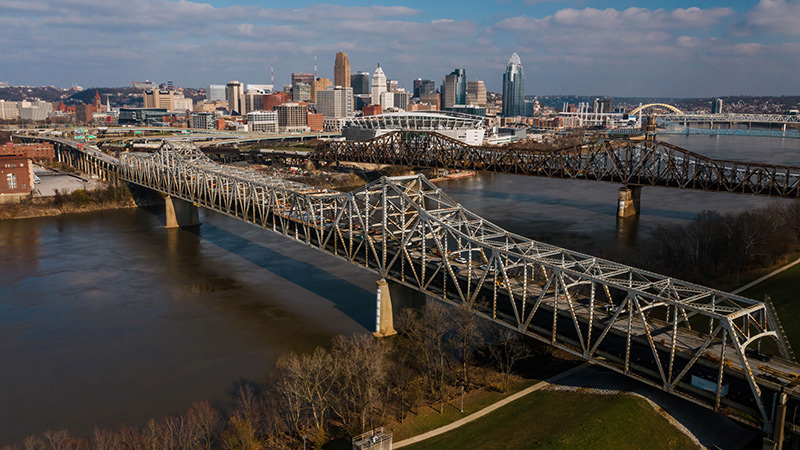
The renovation and expansion of the Brent Spence Bridge Corridor is now underway, and it’s an undertaking that has been years in the making. The Brent Spence Bridge was built in the early 1960’s and opened to traffic in November of 1963. It was originally designed to handle 80,000 vehicles a day. In 2026, the traffic volume is double that at approximately 160,000 vehicles a day.
This span crosses the Ohio River between Cincinnati in Southwestern Ohio and Northern Kentucky. Planning and negotiations between Ohio and Kentucky for a funding agreement took nearly 20 years. It was October of 2004 when Kentucky Transportation Cabinet (KYTC) and the Ohio Department of Transportation (ODOT) signed their first formal agreement to jointly study and develop a project to fix or replace the bridge crossing. Supplemental memorandums were signed in 2012 and early 2022. In December of 2022, the project secured federal awards totaling nearly $1.64 billion that finally set the stage for a finalized Cooperative Interstate Agreement and a kickoff for construction.
The total price tag for the project is $4.05 billion, and it includes a new double-deck “companion” bridge as well as a renovated Brent Spence Bridge. And wire rope truly has a critical role in this project. For, as you know, if you spend any time around big civil jobs, nothing gets built, lifted, hauled, or set without good wire rope. The Brent Spence Bridge Corridor Project is one of the biggest infrastructure undertakings in the country right now. Every day this project proves the vital role of wire rope.
This isn’t just a highway overhaul. It’s a years‑long, steel‑and‑river, boots‑on‑the‑ground operation that leans hard on cranes, barges, rigging crews, and the wire rope that keeps all the materials moving safely. So, when the tugboat Elizabeth Ann came chugging up the Ohio River earlier this year with a massive heavy‑lift crane riding on its deck, all of us in the lifting and rigging world knew exactly what that meant: the job had reached the stage where wire rope becomes the quiet hero of the whole operation.
Even the U.S. Army Corps of Engineers pointed out that just getting that crane from St. Louis to Cincinnati depended entirely on the river system they maintain. From the outset, wire rope is a foundational component in locks and dams. So, even before work began on the Brent Spence in Cincinnati, wire rope was already on the job as equipment for the job was moving upriver toward the worksite.
Did I Say, “More than a Highway Overhaul?”
The Brent Spence project includes a brand‑new double‑deck companion bridge, eight miles of rebuilt interstate approaches, and a full rehab of the original 1963 bridge. The new bridge will be cable‑stayed, which means tall towers and long spans. Just think of all the lifting that goes into that!
Beyond the project involving two bridges, additional aspects that can make for unique lifting needs include marine crane work. The crane the Elizabeth Ann delivered differs from everyday land‑based machines. It’s built for heavy lifts from a floating barge. This is a particularly tough environment for safe lifting and requires specialized wire rope.
Marine cranes depend on:
- Rotation‑resistant rope for steady, true vertical lifts
- Compacted strand rope when you need big strength in tight sheave spaces
- Boom hoist rope that can take a beating from barge movement and river chop
These ropes deal with bending, corrosion, shock loads, and the river’s constant push and pull.
Other Implications for Industrial Wire Rope and Lifting
Additional needs for industrial wire rope for the project seem endless. Just some of them involve:
Sheet Pile and Bulkhead Work
This project includes driving sheet piles and building bulkheads right in the water. That means wire rope is busy hoisting vibratory hammers, positioning piles, securing cofferdams, and holding temporary bracing in place. This work calls for galvanized rope, abrasion‑resistant slings, and stout winch lines.
Foundation and Piling
Driving piles into the riverbed takes rope that cannot fail, such as:
- Strong wire rope slings for rebar cages
- Hoist lines that have been load‑tested and proven
- Rigging that can handle repeated shock loads without giving up
Tower Erection
Once tower construction kicks into gear, wire rope becomes even more important. Crews rely on:
- Temporary guy lines made from high‑strength wire rope
- Hoist lines for lifting tower sections
- Rigging systems for anchor boxes and stay‑cable hardware
These ropes must hold steady in wind, river conditions, and multi‑crane lifts.
Deck Segment Placement
Cable‑stayed decks go up piece by piece, each one lifted and aligned with precision. This calls for:
- Heavy‑lift slings
- Balanced multi‑part line systems
- Hoist ropes that allow millimeter‑level adjustments
Wire rope’s flexibility and strength make it perfect for these tricky suspended lifts.
Stay Cable Installation Support
Even though the final stay cables are specialized systems, wire rope still plays an important role in:
- Temporary tensioning
- Installation hoists
- Safety rigging for crews working at height
This is demanding work that needs rope with high torque resistance and durability.
Demolition and Reconstruction: Wire Rope Doing the Dirty Work
Furthermore, on the Cincinnati side, demolition is already underway. Demolition crews lean heavily on:
- Wire rope wrecking ball assemblies
- Hoist lines for debris containers
- Rigging for structural removal
- Temporary stabilization lines
These jobs call for thick, rugged rope that can take shock loads and abrasion without complaint.
River Logistics and the “Long Haul”
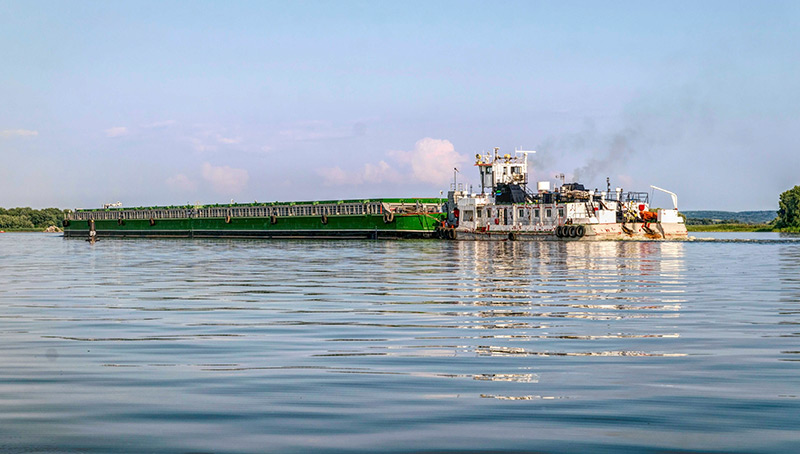
Industrial Wire Rope will keep this job moving for years. Barges will keep hauling equipment and materials as the project continues through 2033. On these vessels alone, wire rope is essential for mooring lines, tow cables, winch systems, and anchor lines. As noted, marine rope has to fight corrosion, fatigue, and constant movement.
Why This Project Matters to the Wire Rope Industry
Whether industrial wire rope is at the “heart” of the Brent Spence Bridge Corridor Project or not, it certainly plays a major role. For all of us in the wire rope world, from manufacturers to distributors and rigging shops, this project is a big deal. Some of the reasons include:
- High‑performance rope is in demand. Marine cranes and cable‑stayed lifts need premium products.
- More marine construction means more marine‑grade rope.
- Safety and inspection requirements are tightening. Certified rigging services will stay busy.
- Long‑term supply opportunities. This job runs into the early 2030s, which means steady demand for hoist lines, slings, boom ropes, mooring lines, and more.
- New lifting tech is becoming standard. Modern cranes use smart load monitoring, and wire rope has to be compatible.
The Brent Spence Bridge Corridor Project is a national priority, and it’s also a reminder of something we know well: wire rope is the backbone of heavy construction. Every lift, every pile, every deck segment, every barge tie‑off depends on rope that’s strong, reliable, and engineered for the job.
As the project moves from foundations to towers to deck assembly, wire rope will stay right at the center of the action—quietly doing the hard work that keeps America’s infrastructure rising.